Multi-Brand Lobby Experience
Role: Lead Product Designer
Devices: Bag tag stations, automated bag drops, CUSS kiosks and Hawaiian proprietary kiosks
Scope: Bag tag station, bag drop flows, in multiple languages
Timeframe: Q3 2025
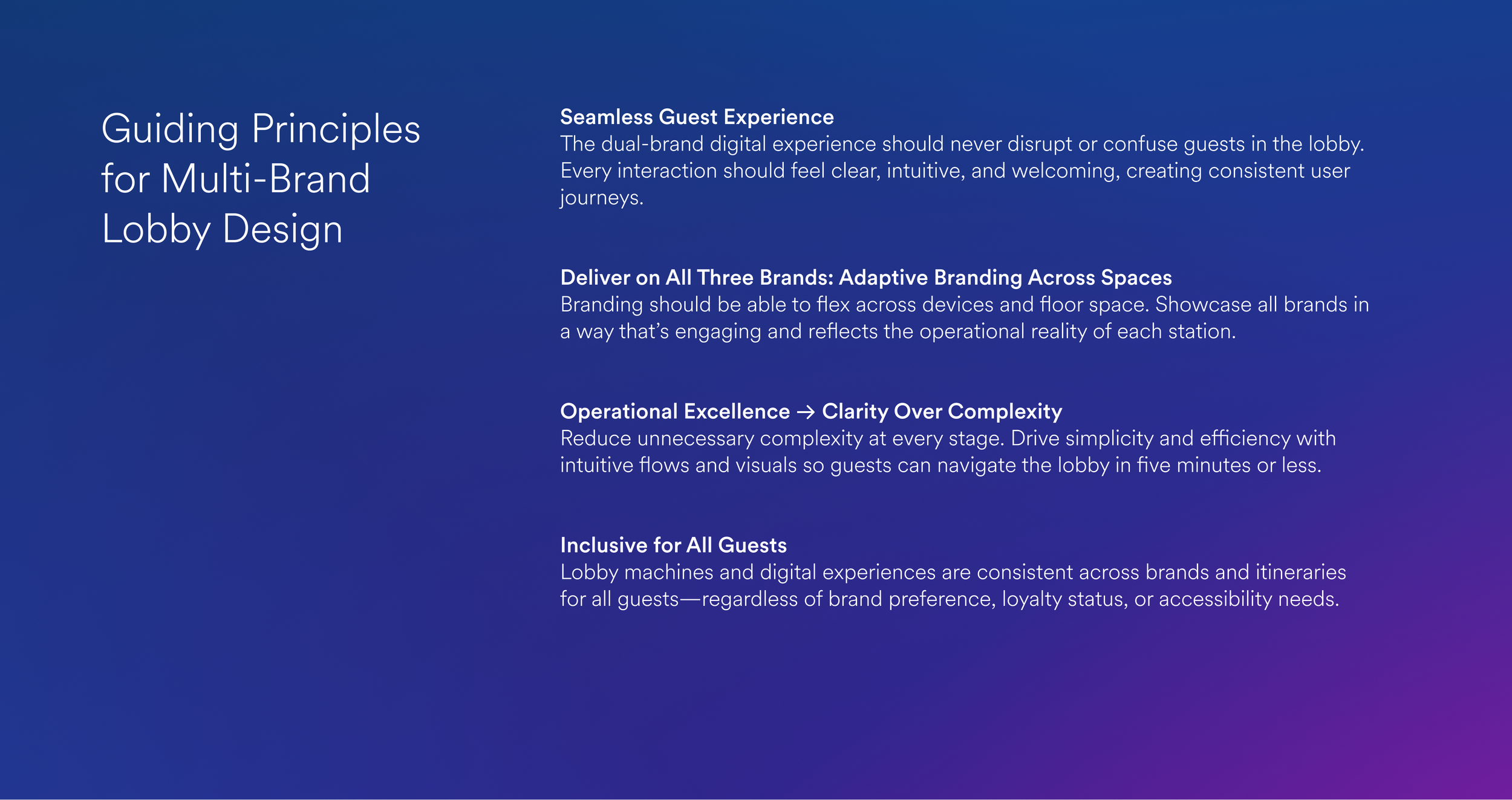
When Alaska Airlines and Hawaiian Airlines came together, every airport lobby needed self-service machines that worked for both brands. I led the design of one multi-brand system for bag tag stations (BTS), automated bag drops (ABD) and shared CUSS kiosks.
Problem
After the merger, a guest could fly either airline from the same lobby, often on the same reservation. But the lobby machines were built for one brand at a time, on different hardware, with different flows.
We needed lobby machines that:
Feel like one airline, without erasing the identity of either brand
Match each airport's real setup, from Alaska-only stations to Hawaiian hubs to shared 50/50 lobbies
Get every guest through the lobby in five minutes or less, whichever brand they booked
The risk was clear: a guest who sees the "wrong" brand on a machine may think they're in the wrong line. That hesitation costs time at the busiest point of the trip.
Mapping the real lobby landscape
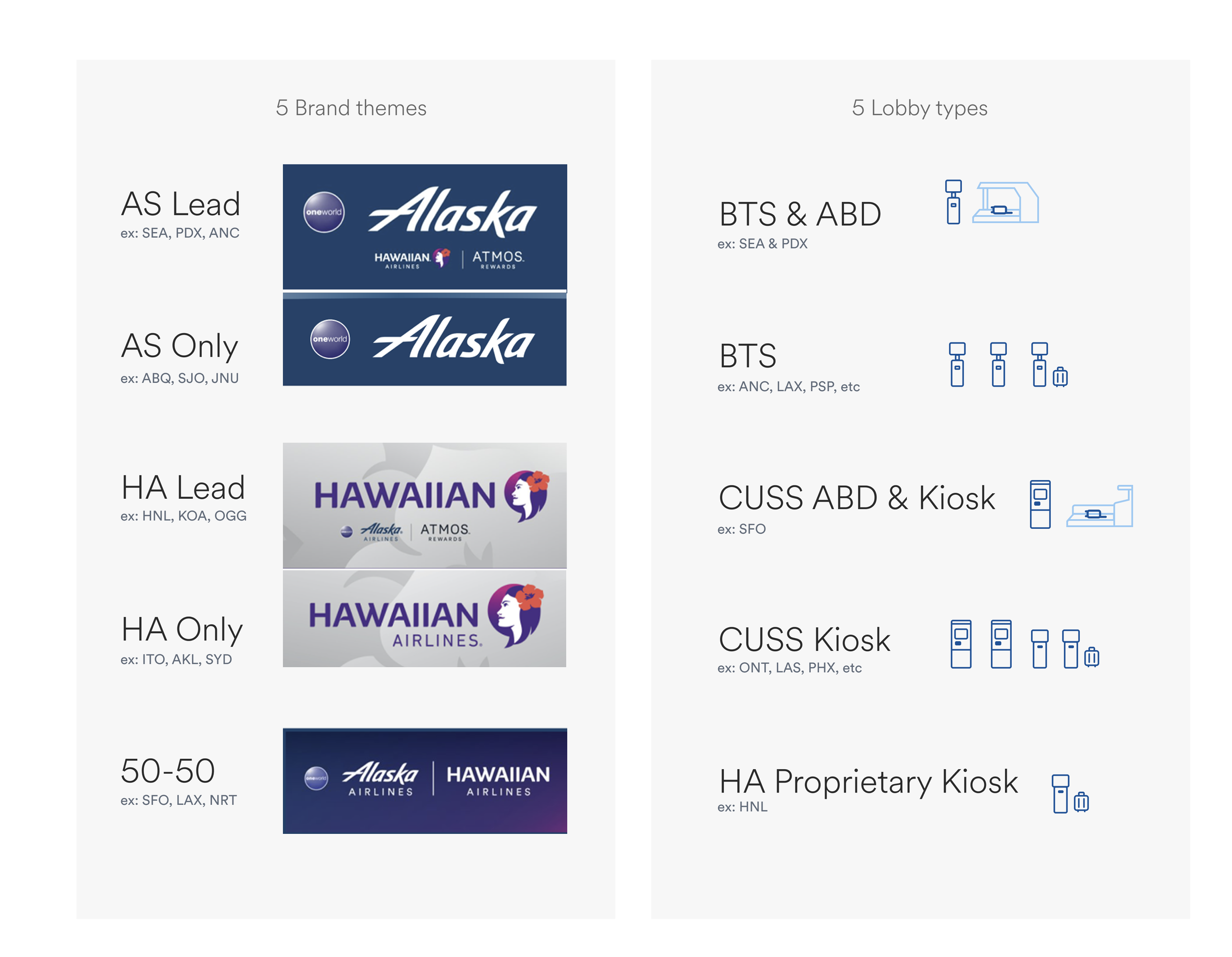
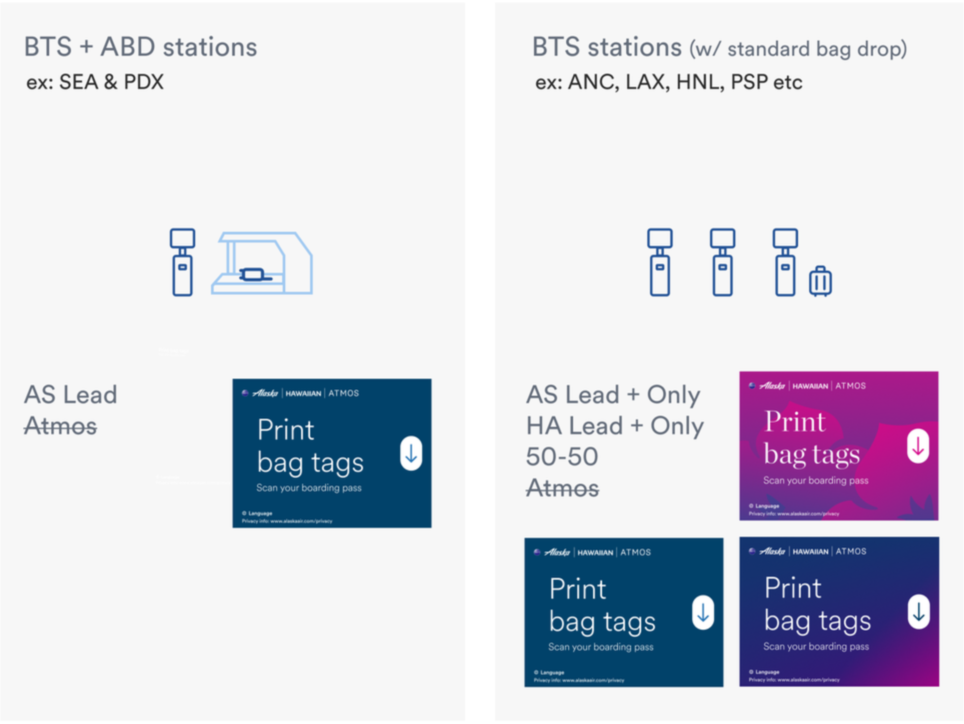
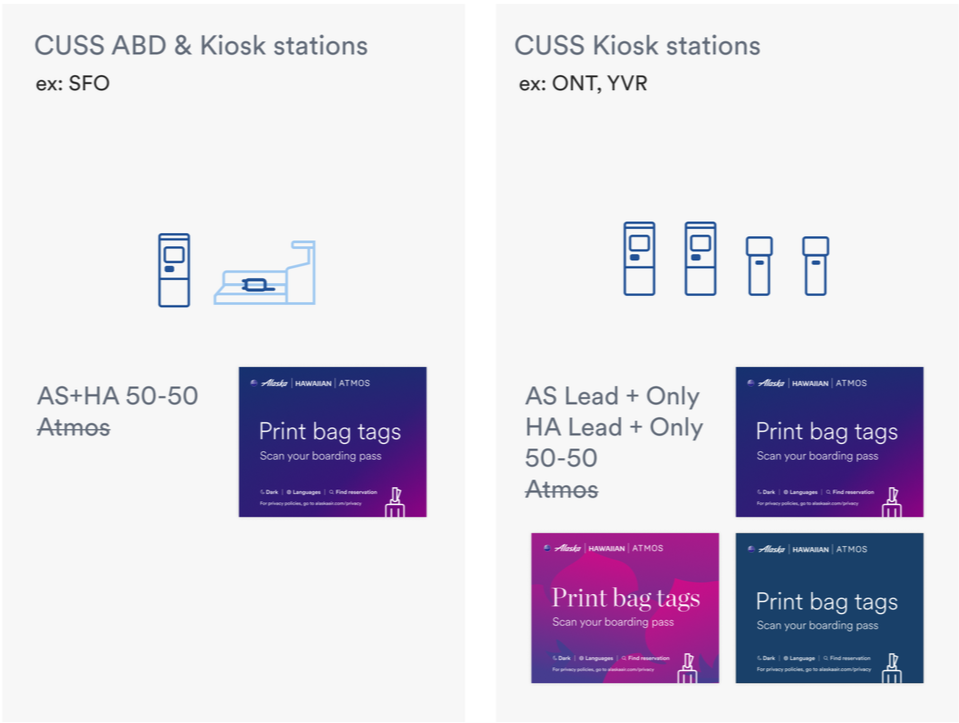
I started by mapping what actually exists across the network. Every station has two dimensions: which brand leads, and which machines are on the floor. That gave us five brand themes and five lobby types.
This determined I would need one system flexible enough to cover every combination, instead of a custom design per airport.
Key decisions
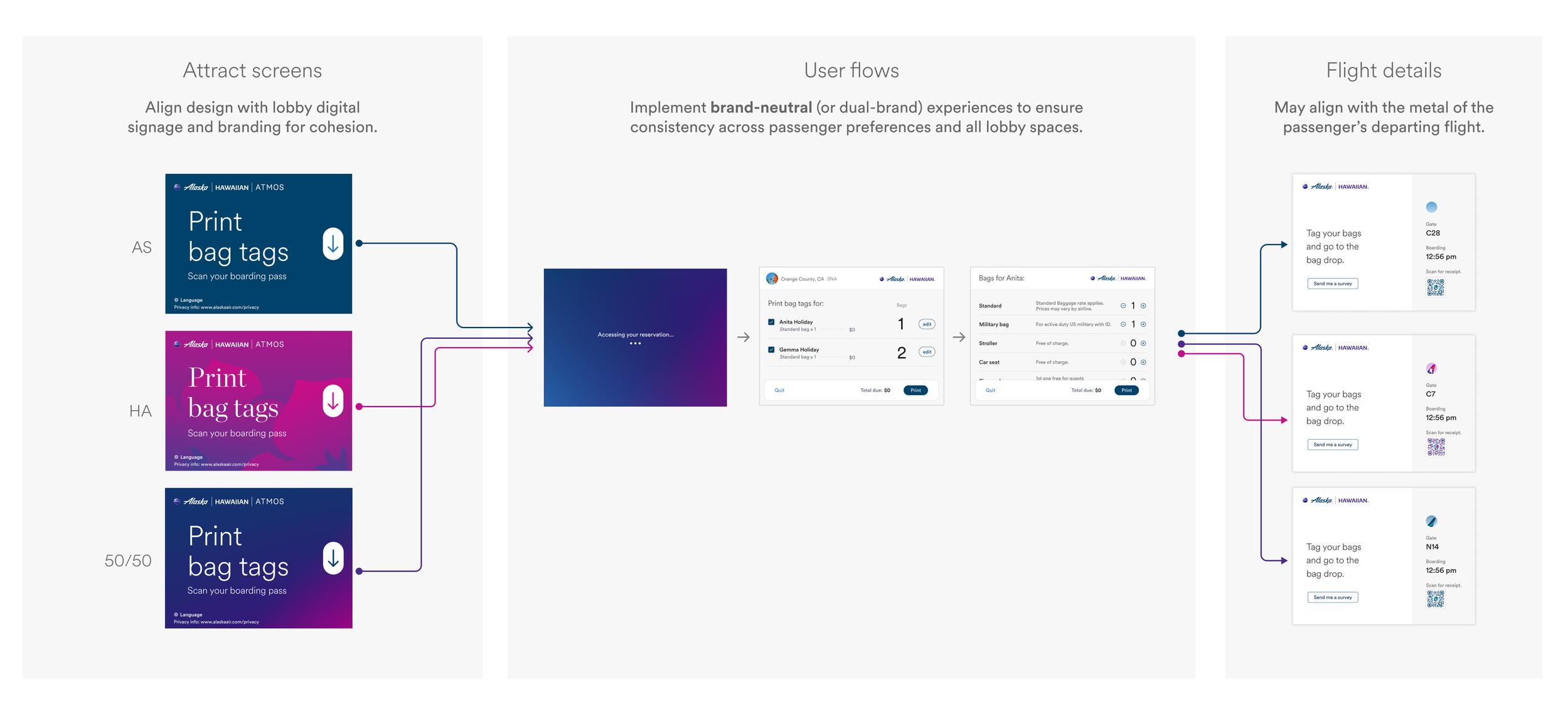
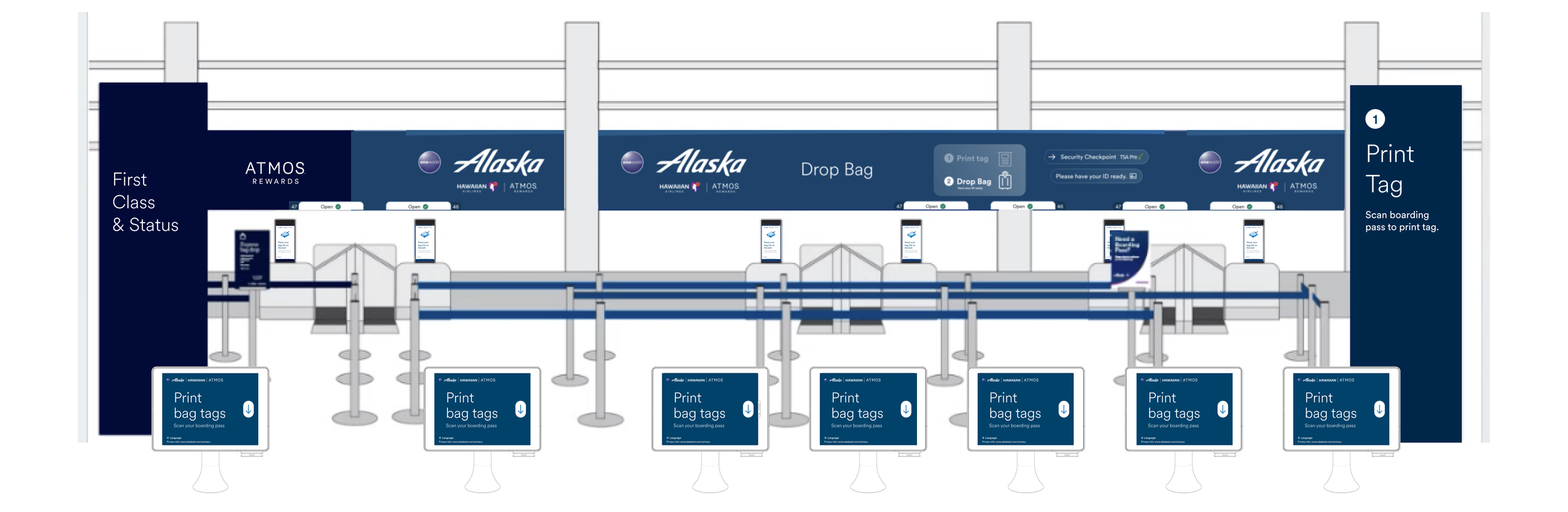
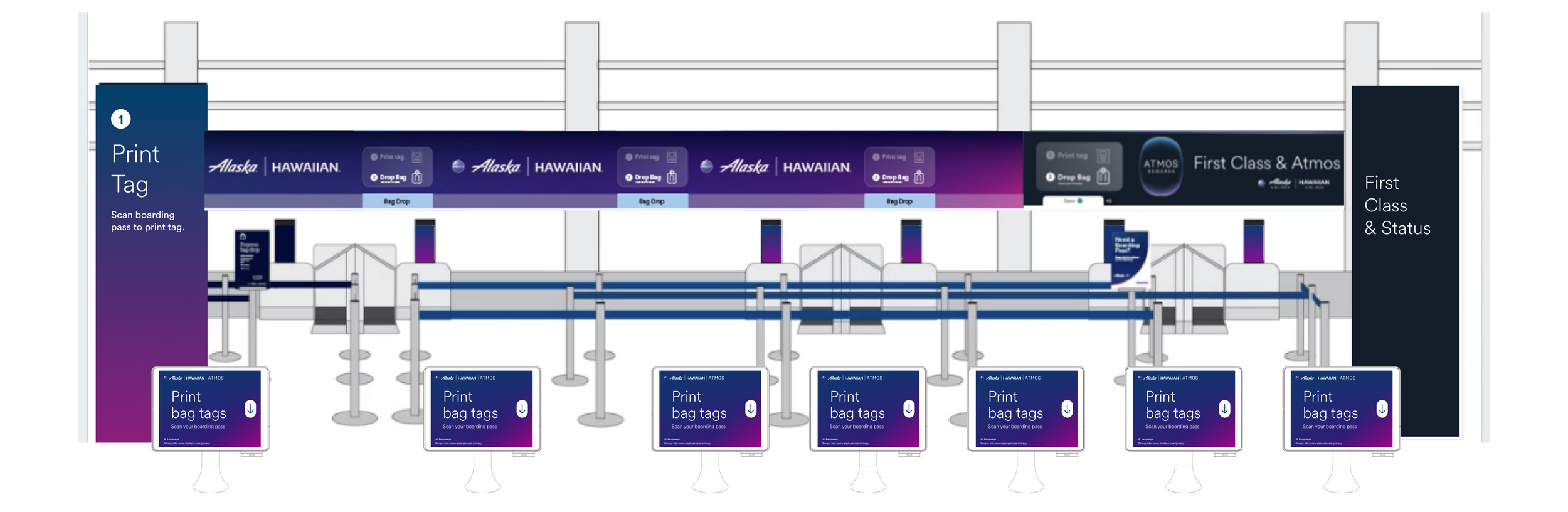
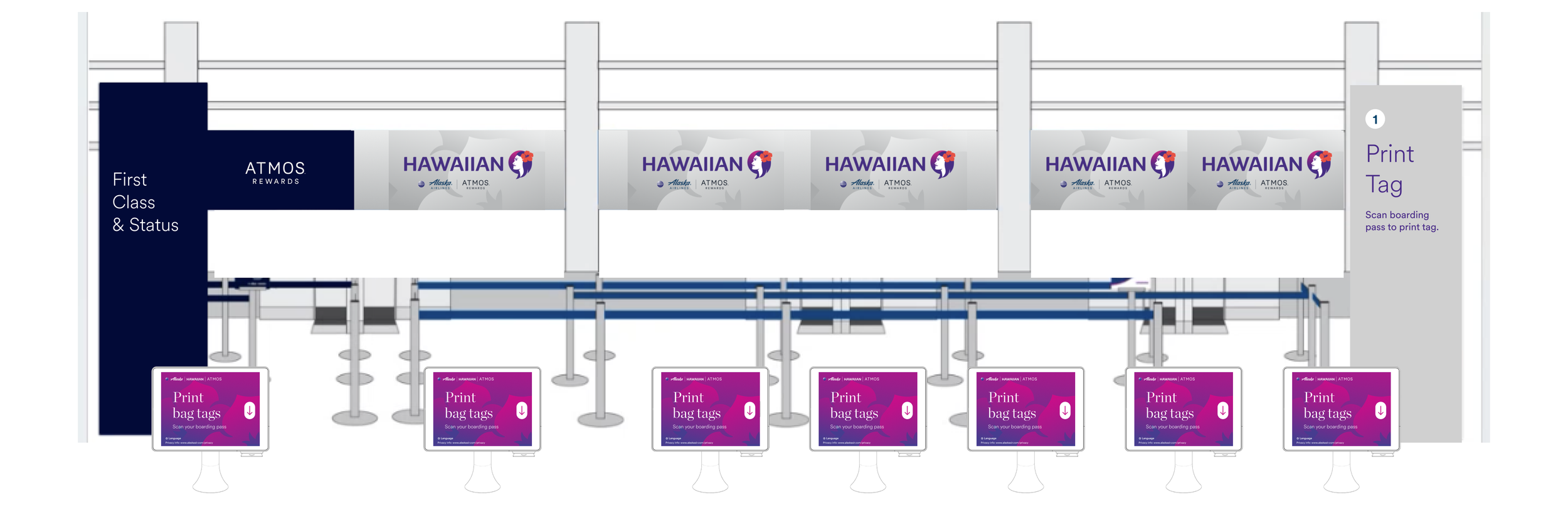
Attract screens match the lobby. The first screen a guest sees matches the airport's signage: Alaska, Hawaiian or 50/50. It confirms they're in the right place before they touch anything.
Task flows stay brand-neutral. Once a guest scans a boarding pass, the flow is the same for every brand. Adding bags, special items (strollers, car seats, military bags, wine and pineapple cases), payment and printing all look and work alike. Guests on a mixed itinerary never switch mental models, and the team maintains one flow instead of five.
The confirmation reflects the guest's flight. The final screen, with gate, boarding time and next steps, can take on the brand of the airline actually operating the flight.
Themes are set per device, not per airport. Bag tag printers support all three themes. Bag drop machines default to the brand their lobby needs, with more themes added as required. Airports can change a device's attract screen when their brand mix changes, with no redesign.
One logo everywhere, fewer brand layers. Lead and only stations share the same treatment, and every device uses the same combined logo.
Designed for each machine's constraints. The same system adapts to very different hardware and allow for each device to control for upmost flexibility and future growth.
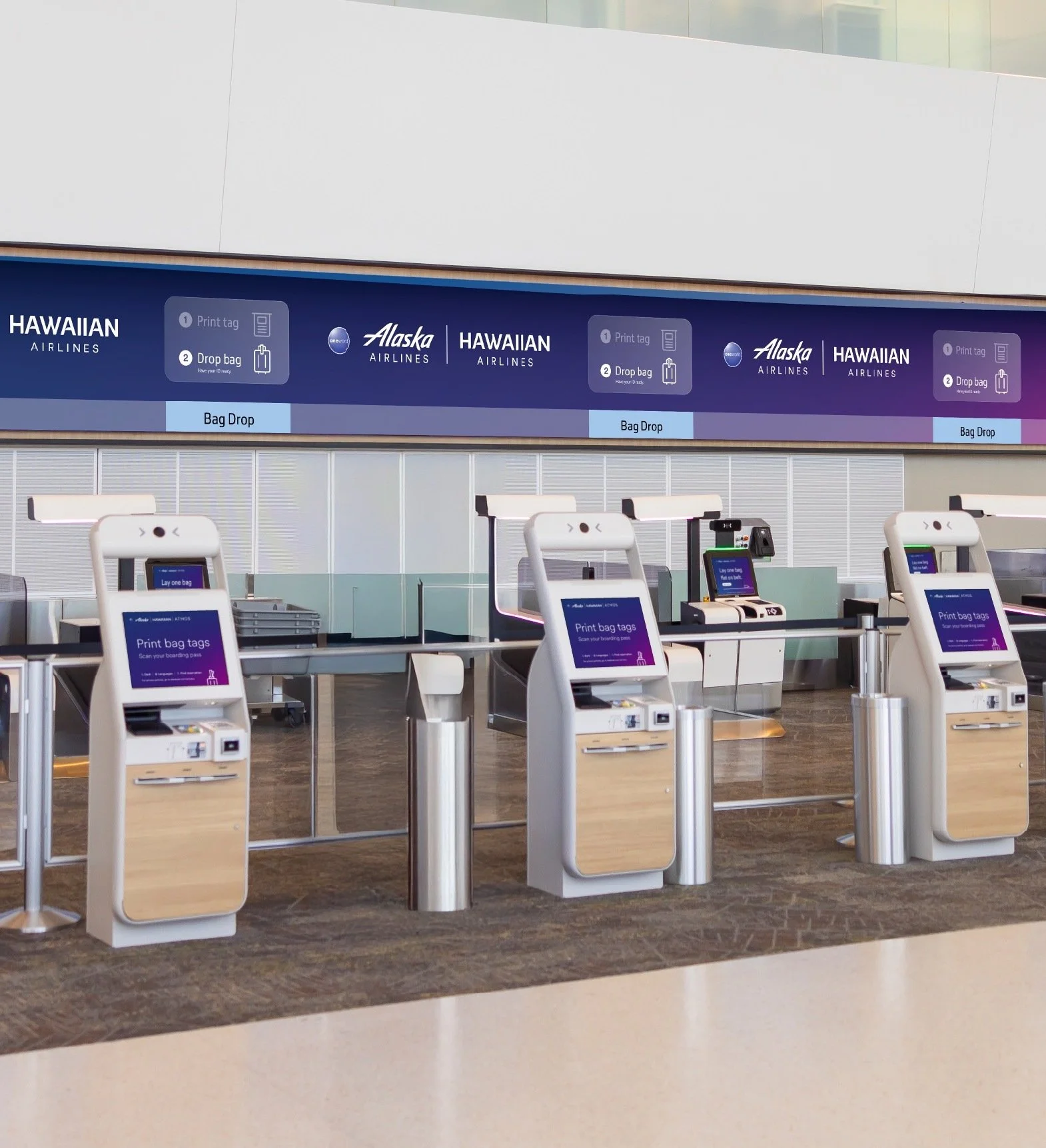
Results:
Launched April 2026
What the system delivers:
One shared flow in place of separate per-brand flows, covering five brand themes across five lobby types
Station playbooks for every configuration: Alaska lead, Hawaiian lead, 50/50, Alaska only and Hawaiian only, each mapped to its devices
The hardest part of a merger isn't the screens. It's agreeing where each brand gets to shine. While most guests probably did not notice much of a change at their individual airport, they would experience more consistency as they traveled and explored the whole network.
It also showed me that a design system is necessary for operational success, not just visual. This system level multi-brand work also combined and added 9 languages options to the 5 different devices.